


Doing business in Norway—An online guide
What are the legal requirements for foreign companies doing business in Norway?
Foreign companies doing business in Norway face a broad set of legal and compliance obligations — spanning entity registration, tax, VAT, employment law, and global mobility. These requirements apply from the moment your company begins operations on Norwegian soil, regardless of the size or duration of your project.
Understanding them upfront is what separates a smooth market entry from one that triggers unexpected costs, penalties, or delays. Below is an overview of key compliance factors every foreign company should address, with practical guidance and links to relevant resources for each.
Key highlights for doing business in Norway:
- Choosing your business structure
- Registering your company
- Gain access to Norwegian public services
- Registrar your business in the VAT register
- Report tax and employee matters to the Norwegian authorities
- Know and comply with Norwegian labor law and obligations, including global mobility matters
Key resources you should download
Why should you consider doing business in Norway?
- Norway has a stable economy, transparent governance, low corruption levels, and a predictable regulatory environment, making it a safe and reliable place for investments.
- Norway strongly focuses on sustainability with affordable, reliable, and green energy options for businesses aiming to reduce their carbon footprint.
- Norway's modern transportation networks, advanced digital infrastructure, and efficient ports facility seamless operations and connectivity both locally and internationally.
- The Norwegian labor market offers a highly skilled and multilingual workforce, ensuring access to talent across various industries.
- Norway actively supports research and development through grants, tax incentives, and funding programs, fostering technological innovation, green energy, and sustainable industries.
- Norway ranks among the top countries for quality of life, offering businesses a competitive edge in attracting and retaining talent.
Also read: Insights on Norwegian business culture
GUIDE | Doing business in Norway—Country specific guide
Norwegian law and regulations may differ between countries. Check out our list of country-specific guide for foreign companies looking to do business in Norway.
Click the button and download the Doing Business in Norway guide for your region.

What is Norwegian compliance?
Norwegian compliance encompasses adhering to the rules, regulations, and standards established by Norwegian authorities and governing bodies. This involves adherence to a spectrum of legal aspects, spanning taxation, labor regulations, environmental standards, and general business operations.
Navigating these requirements can be complex, yet it's essential for companies seeking to do business in Norway.
On this page, we've consolidated the most crucial obligations that you need to be aware of and fulfill when conducting business activities in Norway. Additionally, we provide valuable insights based on our experience and expertise, including relevant guides and checklists, to aid your compliance journey.
Also read: Doing business in Norway—common pitfalls
When must a foreign company register in Norway?
Foreign companies are required to register in Norway as soon as their activities meet one or more of the following thresholds. Registration triggers reporting obligations to Norwegian authorities — including tax, VAT, and payroll reporting — and failure to register on time carries financial penalties.
- Conducts in business activities in Norway and invoicing more than NOK 20,000 for the work performed.
- Hires out employees to work in Norway.
- Has an employee working from a home office/office hotel in Norway, performing the “core activity” of the employer for more than 6 months.
What are the company registration alternatives for foreign companies in Norway?
The two main options for registering a company in Norway are:
- NUF: A Norwegian-registered foreign business, or
- Limited Liability Company: Similar to a subsidiary
Foreign companies engaged in project-based work without long-term plans in the Norwegian market often choose the NUF structure. This page will focus on exploring this option in detail. If you are interested in learning more about different company registration options, check out our blog covering the difference between an LLC and SP.
- 01 NUF EXPLAINED
- 02 LLC EXPLAINED
- 03 SP EXPLAINED
What is a Norwegian-registered foreign company?
The official translation of “NUF” is “Norwegian-registered foreign company”, but the term “Norwegian branch of a foreign company” is also used. Experience has shown that the term “branch” can confuse some foreign companies. It is important to understand that the NUF is not a separate legal entity. The NUF is merely a formal registration of the main company or “headquarters” in a foreign country. The formal registration says little about the foreign company's tax and VAT position.
Also read: How to establish a Norwegian branch of a foreign company (NUF)?
What is a limited liability company?
A limited liability company (LLC), in Norway known as "AS" or "aksjeselskap" is a legal business structure where the owners' liability is limited to their share capital. This means the shareholders are not personally responsible for the company's debts beyond their invested amount. Running a limited liability company (LLC) in Norway comes with several legal and administrative responsibilities that must be managed to stay compliant. While Norway does not require a company secretary by law, these duties are often carried out by a company secretary function.
Key features include:
- A minimum share capital of NOK 30,000.
- A board of directors is required, though small companies may not need a full board.
- The company must be registered with Brønnøysundregistrene (the Norwegian Register of Business Enterprises).
This structure is popular for businesses seeking limited personal financial risk and a formal legal framework.
Also read: Board responsibilities in a limited liability company
What is a sole proprietorship?
A sole proprietorship in Norway (called "enkeltpersonforetak") is a business owned and operated by a single individual. It is not a separate legal entity, meaning the owner is personally liable for all business debts and obligations. It's easy and inexpensive to set up, has low administrative requirements, and is commonly used by freelancers and small business owners. Profits are taxed as part of the owner's personal income.
LLC vs. NUF vs. SP
This table only shows a selection of the requirements for operating a company in Norway. To get a complete overview, and understand what applies to your specific business, a thorough review of your company is necessary.What digital access does a foreign company get after registrering in Norway?
After the NUF registration, the foreign company will obtain a Norwegian organization number, which means that the company will obtain access to;
- Altinn – the Norwegian log-in solution for public services, and
- The electronic portals of the Norwegian Tax Authorities.
These accesses are critical to be compliant with Norwegian reporting responsibilities.
When does a foreign company need to register for VAT in Norway?
Foreign companies selling goods or services in Norway are required to register for VAT once their Norwegian turnover exceeds NOK 50,000 over a 12-month period. VAT must then be added to all taxable sales in Norway at the applicable rate.
There are two additional VAT triggers foreign companies commonly encounter:
-
Advance VAT registration — it is possible to register for VAT before reaching the NOK 50,000 threshold. For project-based work, this is often the practical choice, as it allows the company to invoice with VAT from day one without waiting for the threshold to be reached.
-
Import VAT — importing goods into Norway triggers an obligation to pay import VAT at the border when clearing customs. Registering for VAT before customs clearance allows the company to defer this payment rather than paying it upfront.
VAT compliance in Norway involves more than registration — filing deadlines, fiscal representation requirements, and reverse charge rules all apply to foreign companies. For a full overview, see our online guide here: A practical overview of VAT in Norway
What is the OAR reporting obligation for foreign companies?
The OAR — the Norwegian Assignment and Employee Register (RF-1198 / RF-1199) — requires foreign companies taking on assignments in Norway to report basic details about the project and their employees to the Norwegian Tax Authority.
In short, the client must file basic details about the assignment, such as relevant dates, whether the foreign contractor merely hires out employees or is a “genuine subcontractor”, and whether construction, installation or assembly works occur. These details are critical to find the correct tax and VAT positions of the foreign company. Furthermore, the foreign company is responsible for filing basic details about all employees working on the project.
What is the difference between a genuine subcontract and hire out labor in Norway?
The distinction between a “genuine subcontract” and a “hired labor contract” is unclear.
A typical hire-out-of-labor contract will imply that the foreign company does not have any risk and responsibility for the work performed by the employees. In short, the client is paying for the labor itself and not a certain result.
A genuine subcontract should imply that the foreign company is obliged to deliver a certain product and would not get paid if the job were not performed properly. In other words, the subcontractor has an economic risk and the responsibility for the result of the work performed by the employees. In short, the client is paying for a certain result. As mentioned, the distinction is critical to finding the correct tax positions (for foreign companies and their employees) and VAT positions.
Also read: Why contract classification is key to staying compliant in Norway
What are the Norwegian work permit requirements?
Planning ahead is critical when winning a project in Norway, especially when a foreign company will bring non-EU/EEA workers to Norway.
Any non-EU/EEA worker will need a work permit from UDI (the Norwegian Directorate of Immigration) to perform work in Norway. The application process is comprehensive, and the processing time can be severe, at the time of writing, 3-4 months.
The so-called technical expert rule is a practical and important exception from the work permit application system. In short, a non-EU/EEA worker with a certain technical expertise can, without a work permit, enter Norway to work on a certain project where the need for the technical expertise does not exceed a duration of 3 months.
Also read: Work permits in Norway for skilled workers
GUIDE | Requirements for hiring skilled workers in Norway
Make sure you know the complexities of global mobility when hiring foreign workers to work in Norway. Download guide to learn more.
Why do foreign employees need an ID check in Norway?
When a foreign employee enters Norway, a physical visit to a Norwegian tax office is required. An appointment must be ordered in advance here.
The purpose of the ID check is for the workers to identify themselves to the Norwegian tax authorities and obtain a Norwegian tax deduction card.
The employees should bring identification papers (for instance, a passport), a confirmation letter describing the Norwegian assignment or the employment contract, and a filled-out tax deduction card application form containing certain personal data. The foreign company can also file this tax deduction card application form electronically in advance.
Also read: ID check for foreign employees in Norway
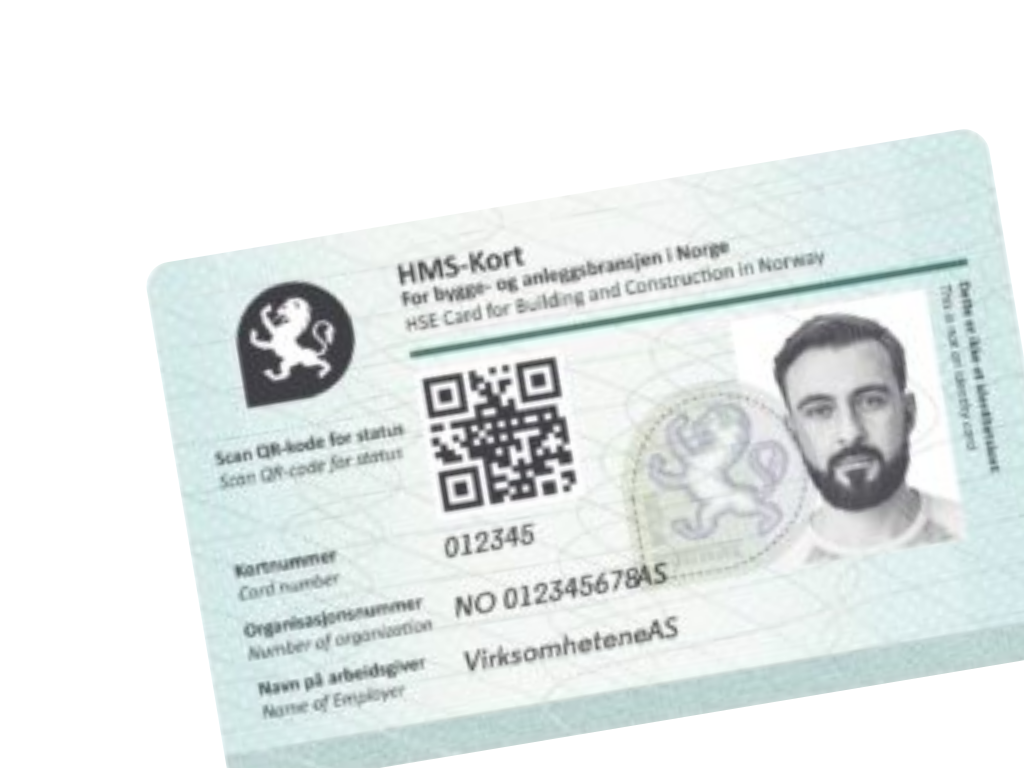
Are HSE cards required to work on Norwegian construction sites?
Yes — any worker performing work on a Norwegian construction or building site is required to carry a valid HSE card (HMS-kort). The card serves as both a mandatory identification document and a physical access pass to the site.
Workers without a valid HSE card can be denied site access — which means delays and potential contract penalties for the foreign company.
The HSE card requirement applies to all workers on site, regardless of nationality, role, or the duration of the assignment. For foreign companies, this means the application process must be initiated well before the project start date — cards typically take up to two weeks to issue after the application is submitted.
To obtain an HSE card, the worker must be registered in Norway with a valid Norwegian organization number linked to their employer. This makes company registration and employee reporting a prerequisite for the HSE card process.
Also read: What is an HSE card?

What is an A1 form?
An A1 is an official EU form confirming that a person is still a member of the home country's social security.
According to the Norwegian National Insurance Act, a foreign company doing business in Norway and its employees must contribute to Norwegian National Insurance Scheme. However, thanks to international agreements, it is relatively easy to avoid these payment obligations. Workers from EU countries should obtain an A1 Form documenting their membership in the National Insurance Scheme of their home country.
When to apply for advanced tax deductions in Norway?
As mentioned, one of the purposes of the ID check is to obtain a Norwegian tax deduction card. According to the Norwegian Tax Payment Act, foreign companies must deduct and pay advance taxes to their employees working in Norway. Without the tax deduction card, the “default” is that the employer must deduct 50 percent advance tax.
For companies without a permanent establishment in Norway, which we will touch on further below, it is possible to apply for an exemption from advance tax deductions.
Also read: 5 tax deductions to claim in your Norwegian tax return
What is the A-report scheme and what must employers report?
The A-report scheme — known in Norway as A-melding — is the mandatory monthly salary reporting system for all employers with workers in Norway. Every month, the foreign employer must report detailed salary and employment information for each employee directly to the Norwegian Tax Authority, the Norwegian Labour and Welfare Administration (NAV), and Statistics Norway.
Salary information includes all kinds of remuneration related to the work in Norway. This is a rather complicated set of rules. For instance, how the workers are living, whether their premises have cooking facilities, etc., are relevant questions.
Also read: What is an A-report - A guide for employers
In simple terms, the A-report consists of three “boxes.”
- The “gross Norwegian salary.”
- The advance tax deductions.
- The employer’s social security contributions (which should be NOK 0 if the relevant employee has an A1 form, cf. above).
What are the corporate tax obligations of a foreign company in Norway?
The standard corporate tax rate in Norway is 22 percent. A foreign company is liable to Norwegian corporate tax on profits generated from business activities carried out in Norway — regardless of where the company is incorporated. In most cases, those same profits will also be taxable in the company's home country, which is where double taxation becomes a practical concern.
Norway has tax treaties with approximately 90 countries specifically to address this. Under most treaties, Norway can only tax business profits attributable to a permanent establishment in Norway — making the permanent establishment question the most critical tax issue for any foreign company operating here.
Establishing a permanent establishment has significant tax consequences — it means Norwegian corporate tax applies to all profits attributable to the Norwegian operations. Early assessment of permanent establishment risk is strongly recommended before any project begins.
A foreign company can establish a permanent establishment in Norway in three ways:
-
Fixed place of business — operating through office premises, a factory, or similar facilities in Norway. As a general rule, the fixed place of business must be maintained for at least approximately six months to constitute a permanent establishment.
-
Construction, installation, or assembly project — participating in a project lasting more than twelve months. Note that some tax treaties set a lower threshold of six months — including the Norway-Portugal and Norway-Czech Republic treaties.
- Dependent agent — having a person in Norway who regularly concludes agreements with Norwegian customers on behalf of the foreign company.
What are the tax obligations for employees working in Norway?
Whether the employees will be taxable to Norway, cf. the Tax Treaty is more complicated, but we can start with the obvious. If the employees are hire-out employees, the Norwegian tax authorities will probably claim that the workers are taxable to Norway.
If the company’s Norwegian activity constitutes a permanent establishment, the main rule is that employees will be taxable to Norway for the income related to the permanent establishment.
Suppose the foreign company's construction work does not constitute a permanent establishment in Norway. In that case, the workers will—in most tax treaties—avoid Norwegian taxability unless they have stayed in Norway for more than 183 days within a 12-month period. However, each specific tax treaty must be studied closely, as there are many pitfalls.
Also read: Taxes in Norway—employee taxation
GUIDE | Personal Income Tax
Download our guide on personal tax return and learn about your tax obligations in Norway.What is PAYE tax scheme (Pay As You Earn)?
The PAYE (Pay As You Earn) scheme is a simplified flat-rate tax arrangement for foreign employees working in Norway. Introduced in 2019, it replaces the standard Norwegian tax return process for eligible workers — reducing the administrative burden for both the employee and the foreign employer.
Under the PAYE scheme, employment income is taxed at a flat rate. The key figures are:
25% flat tax rate — the standard PAYE rate, which includes the employee's social security contribution.
17.2% reduced rate — applies when a valid A1 form is filed with Norwegian authorities, exempting the employee from Norwegian social security contributions.
What are the accounting and auditing obligations for foreign companies in Norway?
In general, all foreign companies doing business in Norway must keep books of accounts based on the Norwegian general accepted accounting principles (“NGAAP”). The Register of Company Accounts will demand annual accounts for all foreign companies that are registered in the Register of Business.
Enterprises (“Foretaksregisteret”). Foreign companies that are only registered in the Central Coordinating Register for Legal Entities (“Enhetsregisteret”) will, as a starting point, not be asked for annual accounts.
Suppose the relevant tax treaty gives Norway the taxation right to the business profits of the foreign company, primarily when the company has a permanent establishment in Norway. In that case, the company must have a Norwegian auditor if the Norwegian turnover exceeds NOK 7 000 000, if the balance sheet shows assets of more than NOK 27 000 000, or average number of employees exceeds 10 full-time equivalents.
Also read: Why correct accounting is essential for your business success in Norway
What labor law obligations apply to foreign companies operating in Norway?
The Norwegian Working Environment Act gives employees stronger rights than laws in many comparable countries — and it applies to all workers performing work in Norway, regardless of where the foreign company is incorporated. Employment rights are taken seriously in Norway, and the Labour Inspection Authority carries out regular controls, particularly on construction sites. Larger Norwegian contractors will also routinely audit their foreign subcontractors to ensure compliance.
In our experience, working hours, salary levels, and termination rules are the areas where foreign employers most frequently face scrutiny. Norwegian employees have strong protection against unjust dismissal — stronger than most foreign employers expect.
For a full overview, check out our online guide here: A Norwegian Labor Law guide for employers
GUIDE | This is Norwegian Labor Law
Download guide and get a comprehensive overview of everything you need to know about Norwegian employment law.

What are the HSE requirements for foreign companies doing business in Norway?
HSE compliance is taken seriously in Norway — and the consequences of getting it wrong reach further up the management chain than most foreign companies expect. Under Section 3-1 of the Norwegian Working Environment Act, "the employer" is responsible for all HSE measures. In practice, this means the General Manager of the foreign company can be held personally liable for accidents, failures, and incidents involving workers in Norway.
Norwegian clients are well aware of this. In most significant contracts, the foreign company will be asked to present an HSE plan and in many cases a Safe Job Analysis before work begins. These are not optional — they are standard contract requirements.
In practice, the General Manager should ensure that HSE measures, HSE plans, and HSE routines are in place and documented before any workers travel to Norway to perform work.
Also read: When is a safety representative required in a company?
Do foreign companies performing electrical work in Norway need special registration?
Yes. Foreign companies performing work related to electrical installations or repair of electrical equipment in Norway are required to register in the Elvirksomhetsregisteret — the Norwegian register of enterprises that design, install, and maintain electrical installations and equipment.
The registration process itself is straightforward. The main challenge is the requirement to appoint a professionally responsible person — known in Norway as "Faglig ansvarlig." This individual must hold documented Norwegian electrical qualifications and take formal responsibility for the company's electrical work in Norway. Finding and appointing a qualified person who meets Norwegian requirements is often the most time-consuming part of the process.
Planning ahead is critical. Delays in registration can hold up project timelines — and work cannot legally begin until registration is in place.
Also read: Registration and approval guide for foreign electrical workers
Do foreign companies need quality certifications to win contracts in Norway?
Not always - but increasingly,yes. Over the last couple of years, we have experienced that Norwegian companies, especially big public companies, have started demanding that foreign companies obtain certain quality certifications before winning contracts in Norway. The so-called Central Approval (Sentral Godkjenning) or StartBANK certification are examples. It is fair to say that these quality certifications can have a commercial effect and increase visibility in the Norwegian market, adding a certain stamp of quality to the business.
Also read: StartBANK registration and its benefits
What is the Norwegian Transparency Act?
The Norwegian Transparency Act entered into force on 1 July 2022. The Act promotes enterprises’ respect for fundamental human rights and decent working conditions. It will primarily be relevant for larger enterprises.
In short, the Transparency Act requires larger enterprises to:
- Carry out a due diligence assessment, meaning that they must look at both their own business, their supply chain, and their business partners to find out where the biggest risks are.
- Publish an account of the due diligence assessment – in practice, a due diligence report – on the company’s webpage.
- Provide information upon request from the Norwegian Consumer Authority. This administrative body is responsible for monitoring compliance with the provisions of the Transparency Act. Please note that the potential sanctions can be quite severe.
Section 3 of the Transparency Act points out that the company “on the date of financial statements [must] exceed the threshold for two of the following three conditions:
- sales revenues: NOK 70 million
- balance sheet total: NOK 35 million
- average number of employees in the financial year: 50 full-time equivalents.”
WEBINAR | The Norwegian Transparency Act and CSRD
Download and watch our webinar to learn more about the Act and CSRD.

Your full service legal provider when doing business in Norway
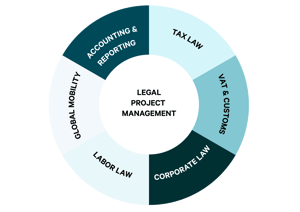
With extensive legal expertise and deep knowledge of Norwegian law, we offer tailored business law services to guide you through every stage of your business journey. Our collaborative, cross-disciplinary teams ensure seamless support, all coordinated through a dedicated legal project manager as your single point of contact.
Also read: Why you need a legal partner when doing business in Norway
Get expert legal help when doing business in Norway?
The list above highlights some of the key factors to consider when entering the Norwegian business market. Navigating Norwegian compliance can be complex, with its intricate laws, regulations, reporting requirements, and application processes.
To ensure a smooth start, we strongly recommend seeking professional advice early in your project. Doing so can help you avoid potential pitfalls, saving both time and money in the long run.
At Aider Legal, you’ll find a versatile team of business lawyers with deep expertise in Norwegian compliance. As a full-service business law firm, we help your company thrive in Norway—supporting everything from establishment to winding down operations. With years of experience, we've successfully guided international businesses through the complexities of the Norwegian market.